
One vision: make football part of humanity’s shared cultural legacy - and use its universal power to create impact for the next generation.
Rani Vanouska T. Modely is the Founder of Football World Heritage (FWH), an international initiative built around a bold idea: football is more than a sport. It is a living cultural practice, shared across borders and transmitted from one generation to the next.
For more than a decade, her work has connected culture, international institutions, football and social impact. From her institutional work with the French National Commission for UNESCO to the creation of Football World Heritage, her journey has followed one constant principle: turn visibility into legacy, and legacy into impact.
Today, that vision extends to a measurable global ambition: one million sustainable footballs for children and communities by 2034.
One Ball. One World. One Future.
BACKGROUND & ORIGINS

Rani Vanouska T. Modely is an entrepreneur and philanthropist whose journey brings together fashion, culture, entrepreneurship, cultural diplomacy and international engagement.
She began her professional career in fashion as a model, using the artist name Vanessa Modely, before expanding her activities into entrepreneurship, culture and the arts. Over the time, her work evolved into a broader international vision built around cultural influence, dialogue and the ability to connect people, institutions and ideas across borders.
Her Indian heritage is rooted in the Chauhan Rajput lineage of India, historically connected to Rajasthan and Ranthambhore. Her family lineage belongs to the Chauhan dynastic tradition associated with the historic Royal House of Chauhan and its Ranthambhore branch, a heritage transmitted across generations and documented through genealogical and historical research.
This heritage has played an important role in shaping her relationship with culture, identity and the transmission of heritage across generations. These principles would become a defining thread throughout her work in cultural diplomacy and international cooperation.
In 2015, this international engagement entered a new institutional chapter when she began collaborating with the French National Commission for UNESCO, under the presidency of Daniel Janicot. She went on to serve as Goodwill Ambassador and Special Adviser, and as President Delegate of the Cercle de la France à l'UNESCO, developing initiatives at the intersection of culture, diplomacy, partnerships and international cooperation.
This experience became one of the foundations of her later vision for Football World Heritage: using one of the world's most universal cultural languages - football - to connect institutions, nations and generations around a shared heritage.
From Culture to UNESCO
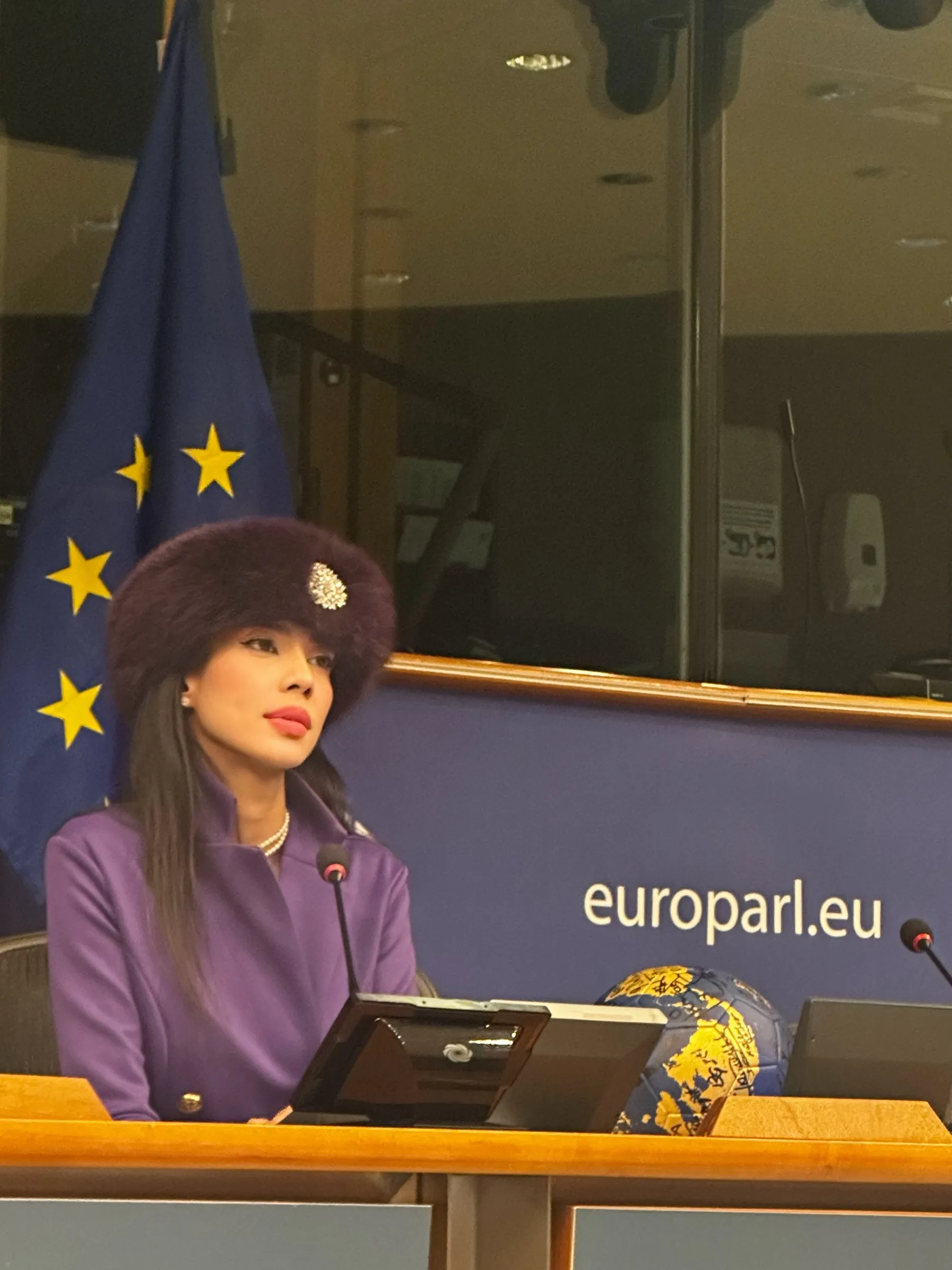
In 2015, Rani Vanouska T. Modely developed a formal collaboration with the French National Commission for UNESCO under the presidency of Daniel Janicot.
Her work focused on cultural influence, strategic development, partnerships, innovative funding and initiatives connecting civil society with the fields of education, science and culture.
During this institutional journey, she served as Goodwill Ambassador and Special Adviser. She was also formally appointed President Delegate of the Cercle de la France à l’UNESCO, with responsibilities including representation, communication, strategic development, partnerships and the promotion and animation of the Cercle.
The Cercle was designed to bring together personalities, partners, patrons and supporters around the work of the French National Commission for UNESCO. Rani Vanouska Modely’s role placed her at the intersection of cultural diplomacy, civil society and international partnership-building.
This experience would become decisive. It shaped a conviction that would later become the foundation of Football World Heritage: heritage is not only what humanity preserves. It is also what humanity transmits.
When Football Became the Vision
Football crosses languages, religions, borders and generations. It is learned in families, streets, schools, clubs and communities. It creates rituals, memories and identities that are passed from one generation to another.
For Modely, that made football much more than a sport.
It made football culture.
From that conviction came a simple but transformative question: could the world’s most universal game also be recognized for its intangible cultural dimension?
That question became Football World Heritage.
Football World Heritage
Rani Vanouska T. Modely founded Football World Heritage to build an international movement around the recognition, preservation and transmission of football’s cultural dimension.
The initiative approaches football not simply as professional sport or entertainment, but as a living practice shared by communities around the world: a source of rituals, collective memory, identity, belonging and intergenerational transmission.
Its ambition is to connect two worlds that rarely move through the same institutions: international cultural diplomacy and global football.
One game. Billions of people. A shared human language.
From an Idea to UNESCO Member States
In 2021, the Football World Heritage initiative reached a major international milestone.
Rani Vanouska T. Modely presented the initiative to H.E. Ambassador Altay Cengizer, President of the 40th session of the UNESCO General Conference, and discussed the proposal concerning football and intangible cultural heritage.
On 8 September 2021, President Cengizer addressed an official letter to Rani Vanouska T. Modely in her capacity as Founder and Director of Football World Heritage.
“Football World Heritage (FWH) has been the one who first came up with this important idea.”
The correspondence also recorded her earlier institutional work as Goodwill Ambassador and Special Adviser and referred to her convention with the French National Commission for UNESCO.
President Cengizer further stated that a circular concerning the initiative had been sent to all 193 UNESCO Member States and relevant departments, bringing the Football World Heritage vision into an international institutional conversation.
From one idea to 193 Member States.
A Bridge Between Culture and World Football
Football World Heritage was conceived as a bridge: between governments and football institutions, between heritage and future generations, and between cultural recognition and action on the ground.
The initiative developed relationships across the football world and with Member States, with the objective of bringing institutions, leaders, players, clubs, civil society and communities into a common conversation about what football represents to humanity.
The mission is not to redefine football. It is to reveal the cultural legacy already living inside it.
A Movement Supported Across World Football
From its early development, Football World Heritage attracted support from leading figures across international football, institutions and public life.
At FIFA level, the initiative has engaged with senior figures across world football, reinforcing its ambition to bring the global football community together around the recognition of football’s cultural heritage and universal values.
Arsène Wenger publicly supported the vision of football as world heritage, describing the game as an extraordinary example of tolerance and understanding between peoples. The movement also received support from figures including Georges Weah, Antoine Griezmann and Didier Deschamps, while Florentino Pérez, President of Real Madrid, expressed his support for the initiative. Sheffield FC - the world’s first football club - also formally expressed its willingness to join the project and contribute its heritage to the international effort.
In 2018, Forbes placed Football World Heritage with the « TOP 100 Football World Leaders » at the center of a special Football World Leaders edition, presenting the initiative alongside Arsène Wenger, Antoine Griezmann and Georges Weah and helping bring the campaign to an international football audience.
What began as an idea was becoming a coalition: cultural institutions, football leaders, clubs, players and public figures connected by one ambition - to recognize and transmit football’s universal cultural legacy.
One Ball. One World.
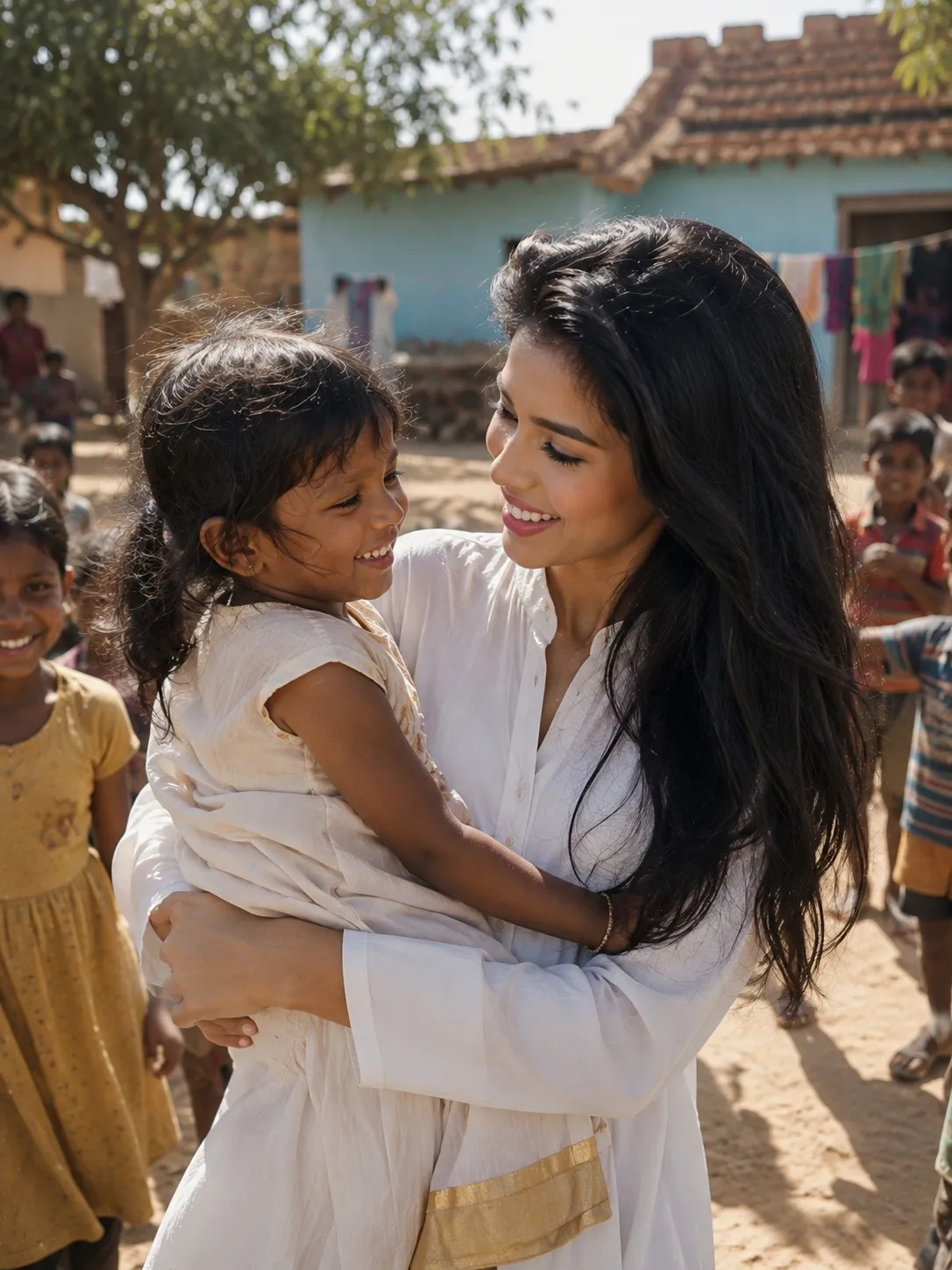
For Rani Vanouska T. Modely, heritage cannot simply be about preserving the past. Heritage must also build the future.
That philosophy led to the next chapter of the vision: turning football’s extraordinary global reach into tangible and measurable impact for children and communities.
The long-term ambition is clear:
1,000,000 sustainable footballs by 2034.
Through OMNYA, the vision moves from heritage to action. The OMNYA ecosystem is designed to make each ball more than an object: a point of connection between a child, a community, a partner and a place. The long-term ambition is to distribute one million sustainable footballs by 2034, while building a global map of impact around the universal language of football.
The ball is the symbol. The child is the purpose.
The OMNYABALL - A Symbol Carried by Global Leaders
The OMNYABALL gives the movement a physical symbol: a sustainable football designed to connect sport, culture, diplomacy and impact.
The first OMNYABALL was signed by Emmanuel Macron. The ball has since carried signatures from international leaders and personalities including Georges Weah and Prince Albert II of Monaco, turning a simple football into a visible symbol of a movement designed to cross borders and generations.
Through OMNYA, this symbol now supports a larger mission: to distribute one million sustainable footballs by 2034 and connect every ball to a wider story of children, communities, heritage and measurable impact.
Football as a Universal Language
Football requires almost nothing to begin: a ball, a space and someone else.
That simplicity has allowed it to become one of humanity’s most universal forms of connection.
A child in Paris. A child in Mumbai. A child in Dakar. A child in Buenos Aires.
Different languages. Different lives. The same ball.
For Rani Vanouska T. Modely, this is where football’s cultural power becomes most visible: in its ability to create connection before a single word is spoken.
A Vision Built for the Next Generation
Rani Vanouska T. Modely’s work now brings together the different chapters of her journey: culture, international institutions, football, heritage, sustainability, children, technology and global partnerships.
Football World Heritage carries the cultural vision. OMNYA is the impact platform that turns that vision into action - connecting sustainable footballs, children, communities and partners around the world. The One Million Balls mission gives this movement a clear and measurable destination: 1,000,000 balls by 2034.
The objective is not simply to distribute footballs. It is to build a global movement in which football becomes a connection between heritage and the future.
One ball can start a game. One game can create a memory. One memory can last a lifetime. One million balls can create a movement.
The Vision
Football belongs to everyone.
It is inherited. It is transmitted. It creates identity. It creates memories. It connects generations.
Rani Vanouska T. Modely’s vision is to ensure that this extraordinary human legacy is recognized, transmitted and used to create something even greater for the generations that follow.
One Ball. One World. One Future.
SOCIAL INNOVATION. HUMAN PURPOSE.
For Rani Vanouska T. Modely, social innovation is about bringing people, institutions and technology together to open new possibilities for children.
Through OMNYA, her ambition is to explore how responsible artificial intelligence could make knowledge and learning more accessible.
Across languages.
Across borders.
One human purpose.
A better future for the next generation.